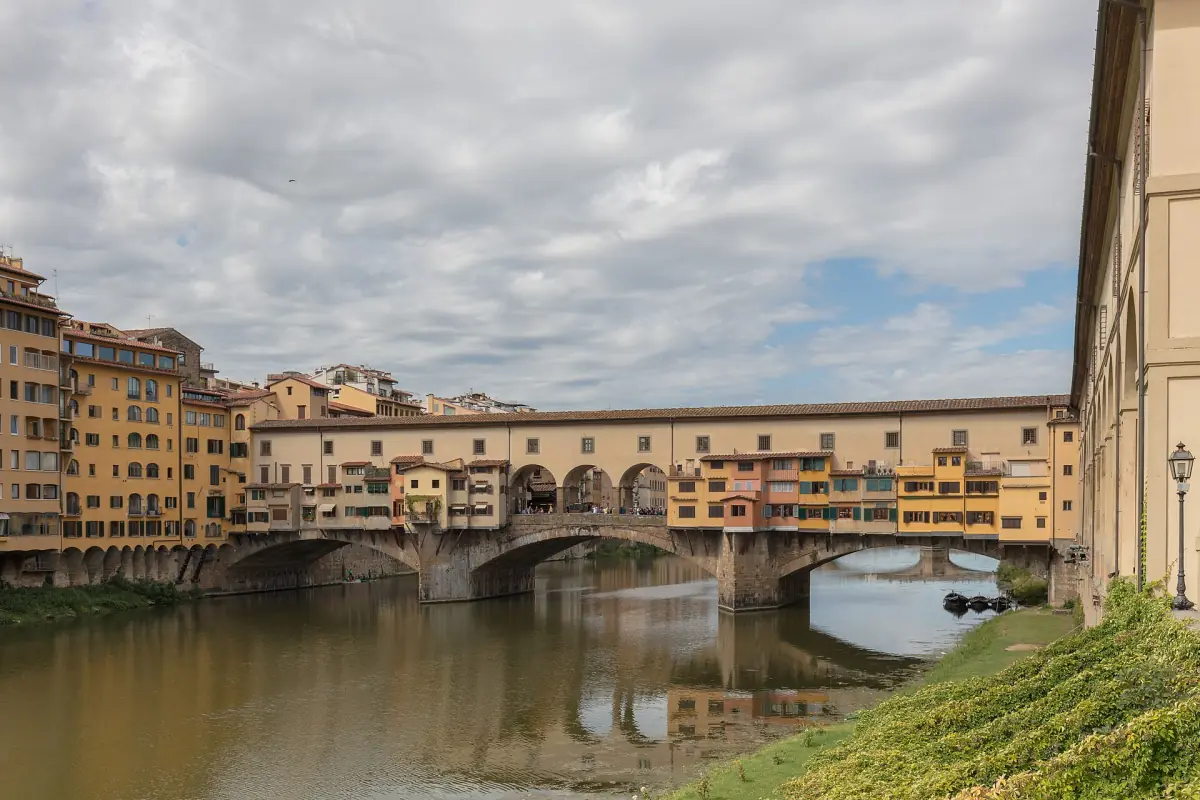
A bridge rebuilt after a flood
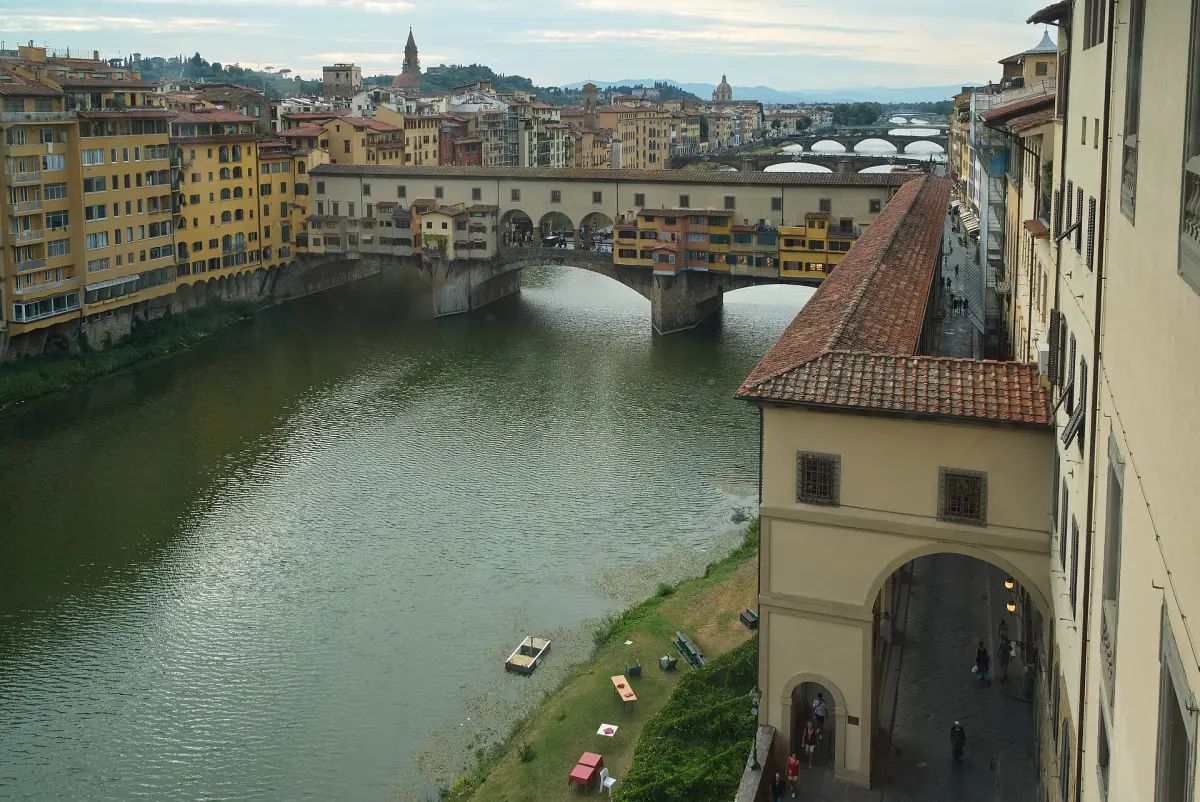
An earlier bridge on the site was destroyed by a flood in 1333. The bridge you cross today was built in 1345. It has three arches, two piers in the river and buildings along both sides, and it has carried shops for centuries.
Most dates are firm. For three details, the architect, the year the goldsmiths arrived and the date of the Cellini monument, you will meet two possible answers, and this page gives both.
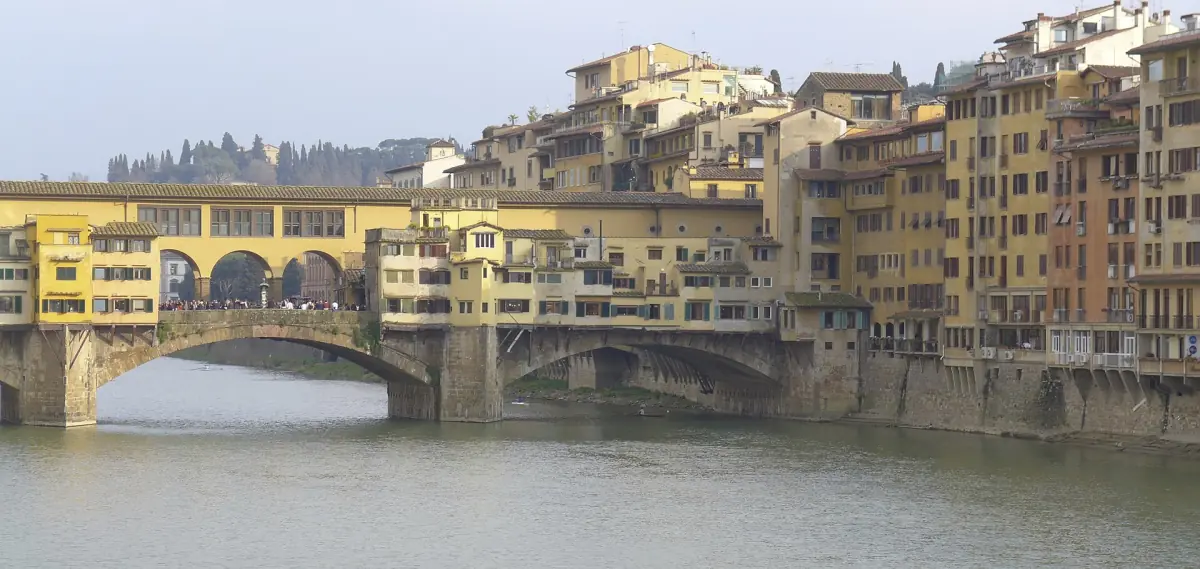
Timeline of the bridge
The main dates in the order they happened.
| Year | Event |
|---|---|
| 1333 | A flood destroys the earlier bridge |
| 1345 | The present bridge is built |
| 1442 | Butchers are concentrated on the bridge |
| 1565 | Vasari builds the corridor for Cosimo I |
| 1593 or 1594 | Goldsmiths and jewellers replace the butchers, fishmongers and tanners |
| 1900 or 1901 | The monument to Cellini is placed in the middle of the bridge |
| 1944 | The bridge survives the demolitions of the German retreat |
| 1966 | A flood damages the bridge but does not destroy its structure |
Florence tours and tickets
Walking tours across the Ponte Vecchio, Uffizi and Vasari Corridor tickets and food tours, with live prices and availability.
Who built it
The name of the architect is not certain.
The bridge of 1345 is usually linked to Taddeo Gaddi, and Neri di Fioravante is the other name given. Either way, the year 1345 and the flood of 1333 are the firm points.
The bridge was built with buildings along both sides, and it has been a street of shops ever since.
From butchers to goldsmiths
The trade on the bridge changed twice.
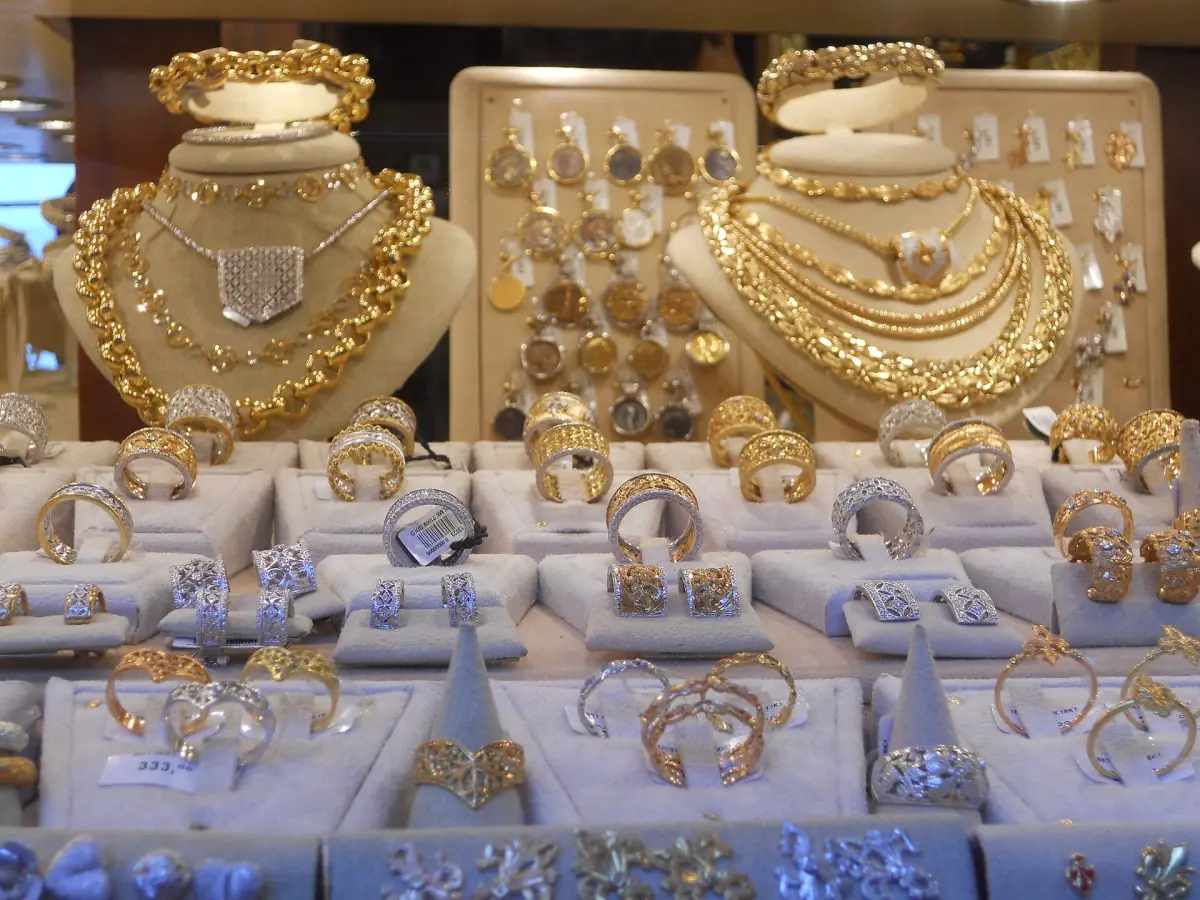
In 1442 butchers were brought together on the bridge. Under Ferdinando I, butchers, fishmongers and tanners had to make way for goldsmiths and jewellers. The change is dated to 1593, and a decree of 27 September 1594 is also named. Treat 1593 or 1594 as the turning point.
The change is linked to the smell. The corridor above the shops had been built for Cosimo I, and the trades below it were a nuisance. From then on the bridge became known for gold, and it still is. To see what the shops sell today, read the page on the shops.
The corridor above the shops
A private route that is now open to visitors.
Giorgio Vasari built the corridor in 1565 for Cosimo I. It linked the Palazzo Vecchio with the Palazzo Pitti by way of the Uffizi and the bridge. It closed to the public in 2016 and reopened on 21 December 2024 after safety work. Tickets, times and the route are on the Vasari Corridor page.
The Cellini monument
In the middle of the bridge stands a monument to Benvenuto Cellini, the goldsmith, with a bust by Raffaello Romanelli. It dates from 1900 or 1901. Padlocks on the monument and its railing are not allowed.
War and flood
Two events shaped what remains.
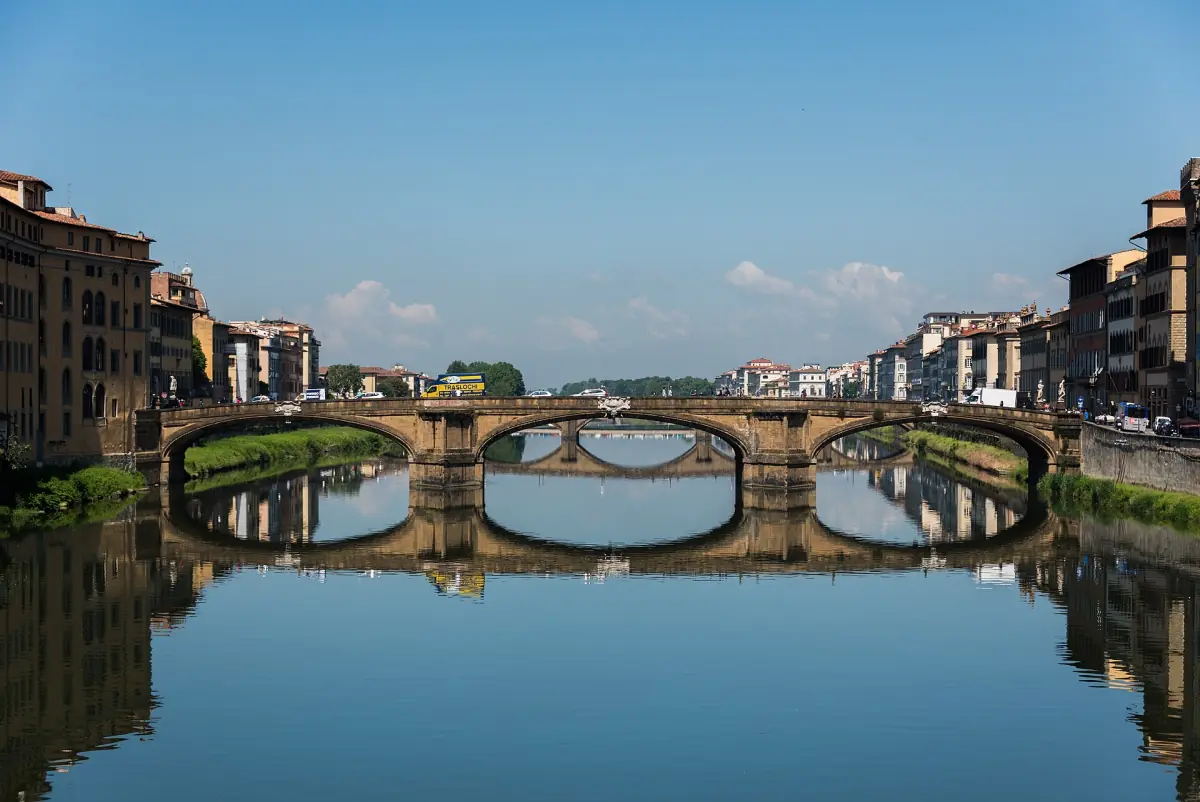
In August 1944 the retreating German army blew up Florence's bridges. The Ponte Vecchio was the only one that was left standing. Stories about one order or one rescuer are best left aside.
The flood of 1966 caused damage on the bridge and did not destroy its structure. That says nothing about how safe the bridge is against future floods.
Restoration in stages
Restoration work on the bridge is planned in sections. It began at the piers and abutments, which are worked on from the river. Later stages cover the paving and walls and then the arches and facades. Check the current state of the work before you plan photographs.
Photo spots →What to look for on the bridge today
Four details that connect the history to what you see.
Three arches
The three arches and the two piers are the part of the structure that dates from 1345.
The shop fronts
The goldsmiths' windows on both sides continue the trade that began in 1593 or 1594.
The corridor
The covered passage above the shops is Vasari's work of 1565.
The Cellini monument
In the middle of the bridge, you find the monument to the goldsmith Cellini.
Continue your visit
Pages that follow on from the history.
Ponte Vecchio history: frequently asked questions
When was the Ponte Vecchio built?
The present bridge dates from 1345. A flood in 1333 had destroyed the bridge that stood there before.
Who designed the Ponte Vecchio?
The architect is uncertain. Taddeo Gaddi is the name usually given, and Neri di Fioravante is another. The firm facts are the flood of 1333 and the new bridge of 1345.
Why are there goldsmiths on the bridge?
Butchers were concentrated on the bridge in 1442. In 1593 or 1594 under Ferdinando I, butchers, fishmongers and tanners had to make way for goldsmiths and jewellers, partly because of the smell below the corridor.
Why did the bridge survive the Second World War?
It was the only bridge in Florence that was not blown up in August 1944. Be careful with stories that credit one person or one order.
Who built the Vasari Corridor?
Giorgio Vasari built it in 1565 for Cosimo I. It linked the Palazzo Vecchio with the Palazzo Pitti, and it reopened to the public on 21 December 2024.